

Komesha Dhuluma
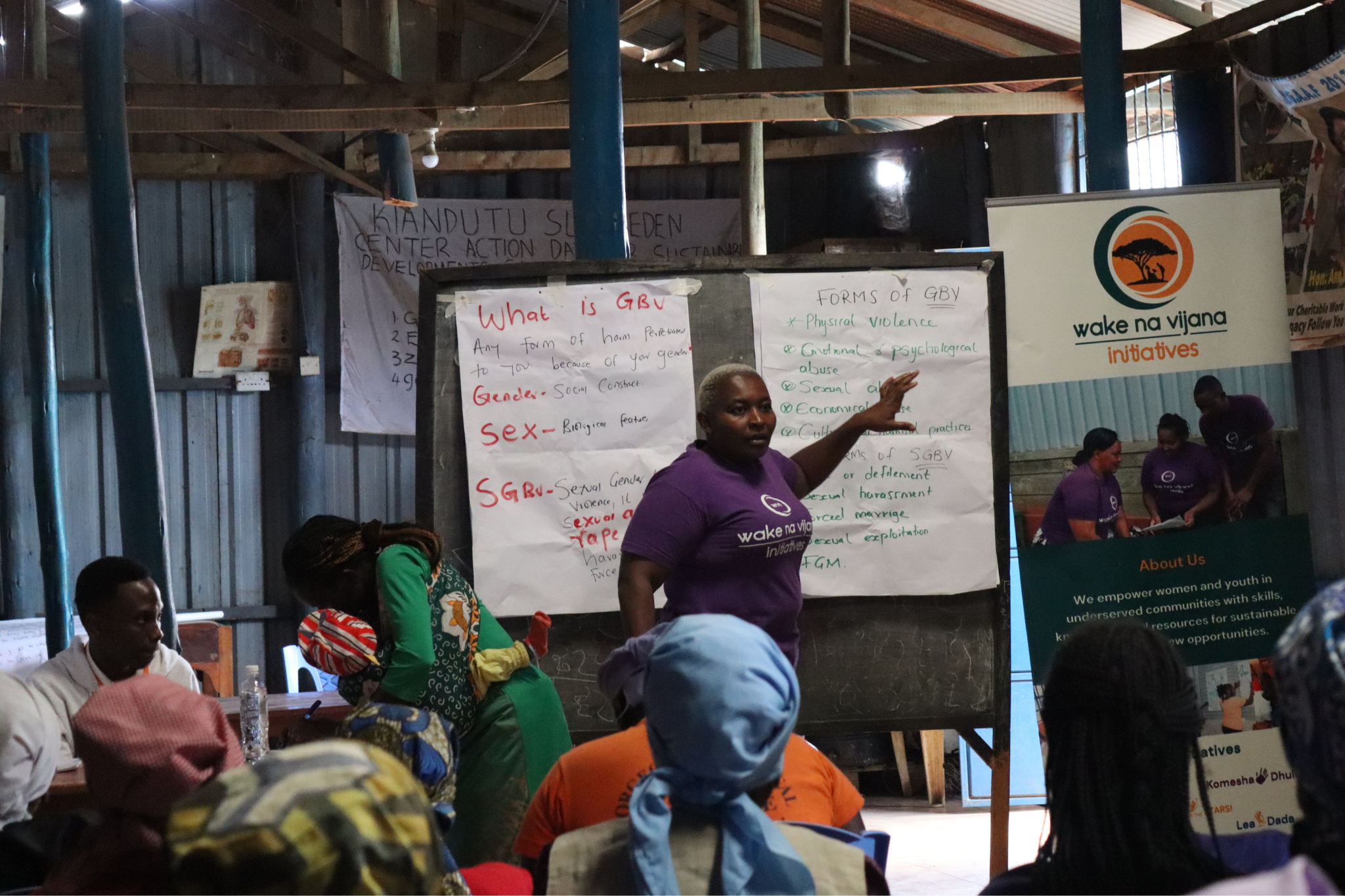
Last week, we held the second session of Gender-Based Violence (GBV) awareness at Kiandutu, where we discussed Sexual and Gender-Based Violence (SGBV). The session came at a crucial time, as Kiambu County continues to grapple with rising cases of SGBV.
According to The Star, in 2023 alone, the county reported over 20,000 cases, with hotspots like Thika Sub-County accounting for nearly half of all reported incidents. Despite these alarming numbers, only about 25% of victims formally report abuse, highlighting the urgent need for awareness, prevention, and support initiatives. By creating safe spaces to discuss these issues, our sessions aim to empower the community with knowledge, resources, and actionable steps to reduce SGBV.
Rising issues
This was more than just an awareness session; it was an emotional experience for many participants, some of whom were moved to tears as they shared stories of abuse within the community. During the session, we explored the concept of bystander intervention, emphasizing that those who witness abuse have a critical role: preventing, intervening, and supporting survivors.
We also recognized that due to insecurity and safety concerns in the slum, bystanders often find themselves in difficult situations, fearing that stepping in could put them at risk of violence. Fear remains a significant contributor to the perpetuation of abuse, especially in our communities. By addressing and reducing this fear, we can foster safer communities where people feel empowered to speak up against violence.
Broken systems
Another worrying contributor to violence is the lack of support from local authorities and the spread of misinformation. During our discussion on the official reporting system for abuse, it became clear that many victims choose not to report cases because they are asked to pay for the P3 form.
One participant shared, “When I took my case to the police station, I recorded my statement and took an OB number, but when I went to the gender desk I was asked to pay 2,000 Kenyan shillings for the P3 form. I didn’t have the money, and it discouraged me from pursuing my case.” Another participant added that she had paid 1,500 Kenyan shillings for the form.
Alice, our collaborating partner for this awareness session, clarified that the P3 form should not be paid for. It is an official document used to report a crime, and charging victims creates a barrier to justice. Police and government health facilities are responsible for issuing the form free of charge.
This is strongly supported by the Kenyan Victim Protection Act (2014) and the Sexual Offences Act, both of which emphasize that victims must have access to justice and medical documentation without financial barriers.
Where to report first
We asked our participants where a survivor should report first in cases of SGBV. Most mentioned the police station, but we clarified that the first step should be going to a hospital.
If a victim is in a state where walking is difficult or their clothes are stained with blood, the clothes can be carefully changed and stored in a kaki bag, and the victim should avoid bathing to preserve crucial evidence. All these steps should ideally be taken within 72 hours to reduce the risk of infections and unintended pregnancy.
Regarding concerns about the P3 form, we assured participants that it is provided at the hospital, removing the need to pay or go directly to the police first