

Reach for the Stars:
In today’s world, education goes beyond books and exams. Students need opportunities to balance academics with the development of artistic, creative, and physical skills. This is the essence of holistic education embedding extracurricular activities, an approach that nurtures the whole learner by integrating clubs, sports, and creative programs into school life. These activities offer spaces where students discover their passions, develop life skills, and build lasting relationships that shape who they become.
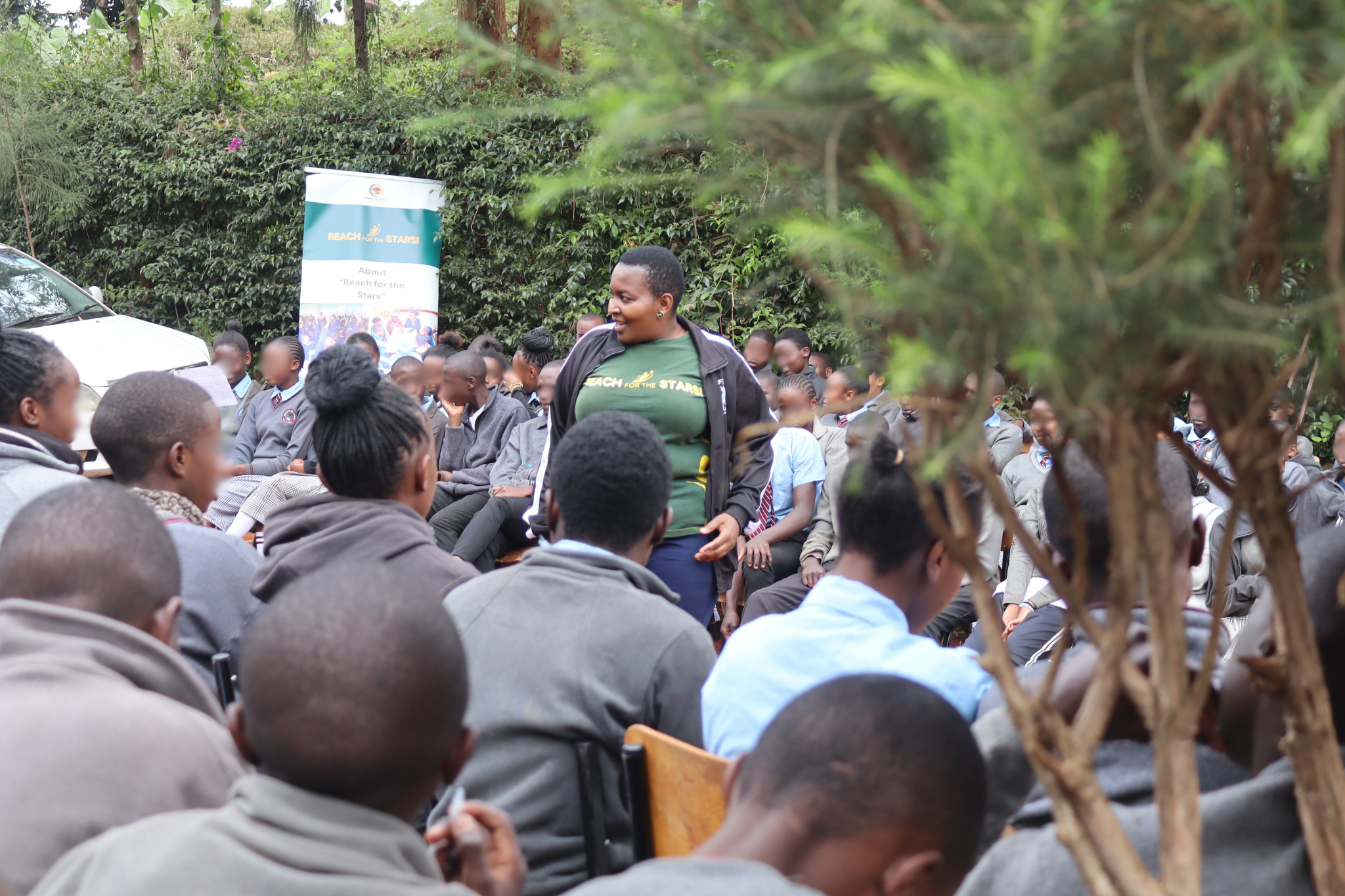
Last week, we had an impactful Reach for the Stars session at Muchatha High School, where we explored the value of participating in extracurricular activities.
We opened with a simple question: “Do you have any clubs in your school?”
The response was immediate and enthusiastic. Students eagerly listed football and rugby, and one even threw in a laugh with the mention of the “eating club”, apparently an informal competition where the winner gets a second helping of food. That moment of shared laughter reminded us just how vibrant school life becomes when students feel seen and involved.
It also gave us the perfect opening to reflect on the value clubs bring. They’re not just fun diversions. They’re where students learn leadership, take initiative, and gain confidence. Clubs make school something to look forward to, especially when students are given the freedom to explore their interests.
Building Clubs That Thrive
“I have always liked art, but I didn’t know where I could find an art club to join,” one student expressed.
This honest reflection echoed what many others felt, an interest waiting for a space to grow. It reminded us that while some clubs already exist, others are yet to be born. We encouraged the students to be the ones to start more clubs, like journalism club which helps with public speaking and Science club which is an early exposure to STEM (Science, Technology, Engineering,Mathematics).
We then explained to the students that forming a club is only the first step—good leadership and proper management are just as important. Every club should have a structure that allows it to run smoothly and achieve its goals.
At the top is the club patron, usually a teacher, who offers guidance and ensures that the club aligns with the school’s values. Then comes the club chairperson or president, a student elected by members, who leads the club and coordinates its activities. Supporting them is the vice chairperson or vice president, who steps in when the chairperson is absent and helps with overall leadership.
The secretary plays a key role by keeping records, taking meeting minutes, and handling club communication. Where finances are involved, a treasurer may also be appointed to manage the club’s budget and track any contributions or expenses.
As we concluded the session, we left the students with one message:
don’t wait for the perfect club to find you, create it, lead it, grow it.
Because in the journey of education, it’s not just what you learn in class that defines you, but what you choose to do with it beyond the books.